The product, screen by screen.
Ledgerline, a made-up vendor, sells a self-hosted analytics server to a handful of customers. Here's how that looks in Breakwater, from the first product to the last pull. Every screen is the real app.
01
Your products
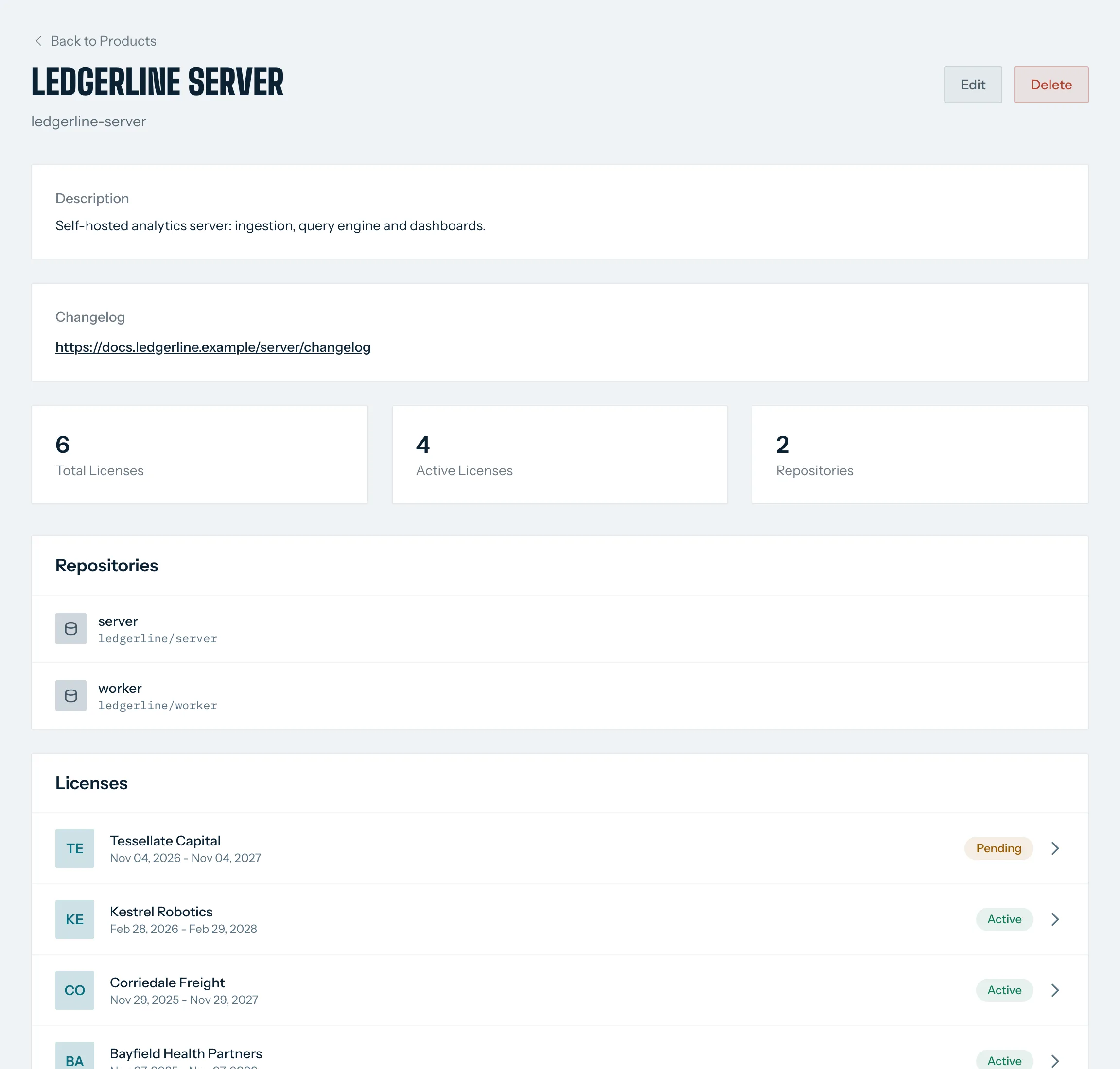
A product is what a customer buys: one or more repositories in your registry. Ledgerline Server is two images, the server and its worker, and the product page shows every license for it.
02
A license for each customer
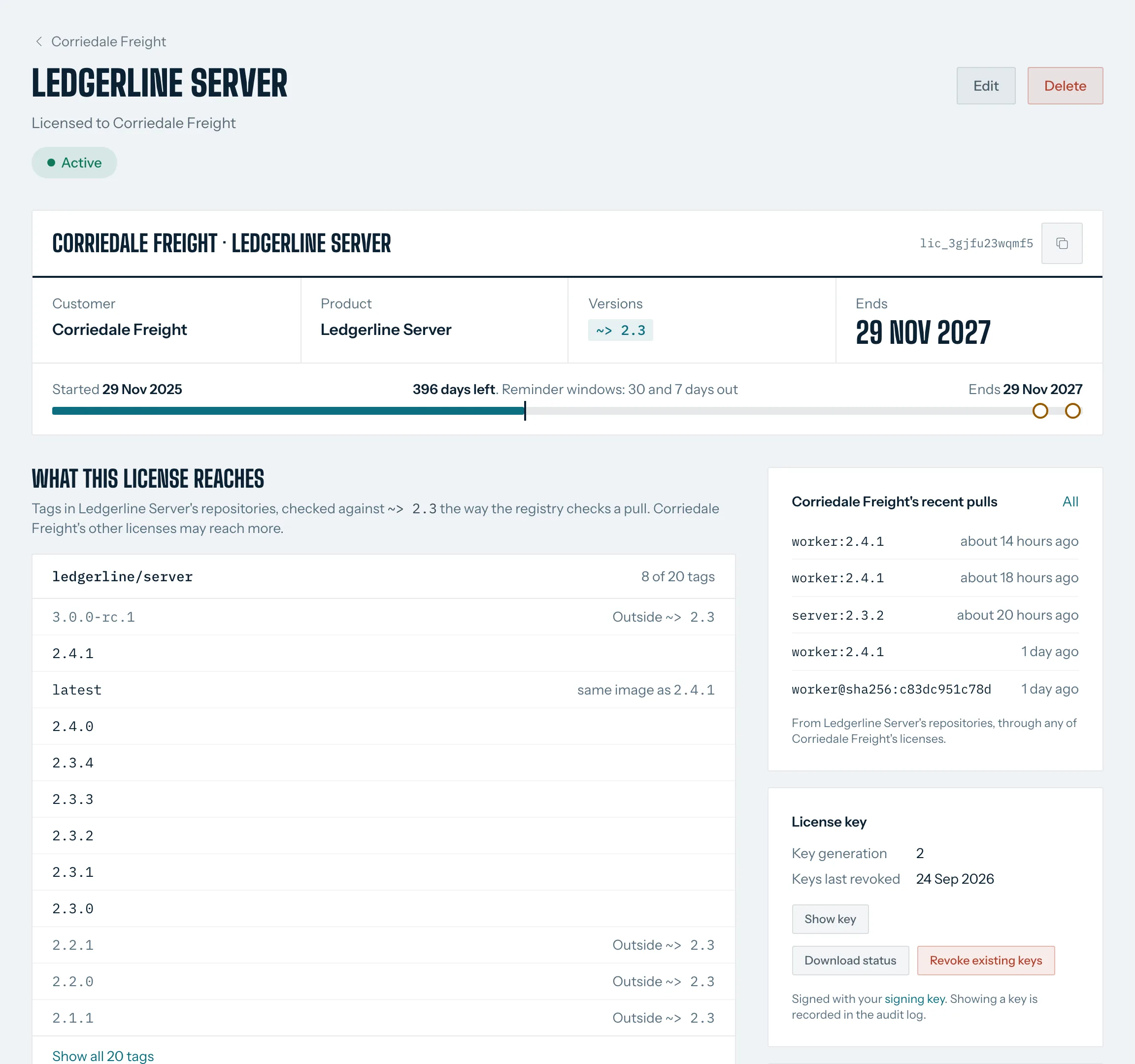
A license gives one customer one product, between a start and an end date, for the versions its tag pattern covers. Corriedale Freight's ~> 2.3 reaches every 2.x from 2.3 on, and the page lists the tags it does and doesn't reach, checked the way the registry checks a pull.
03
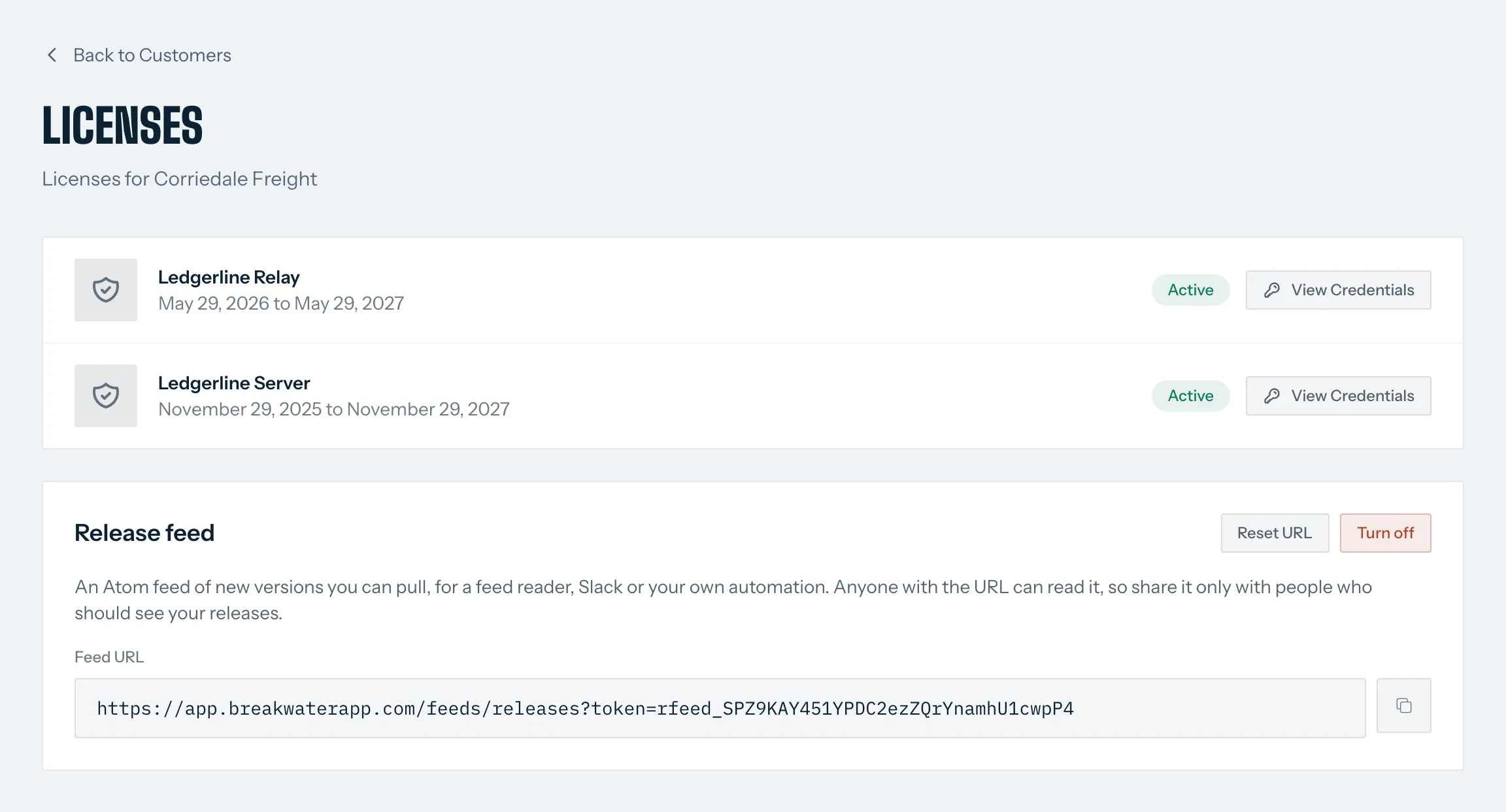
Your customer signs in
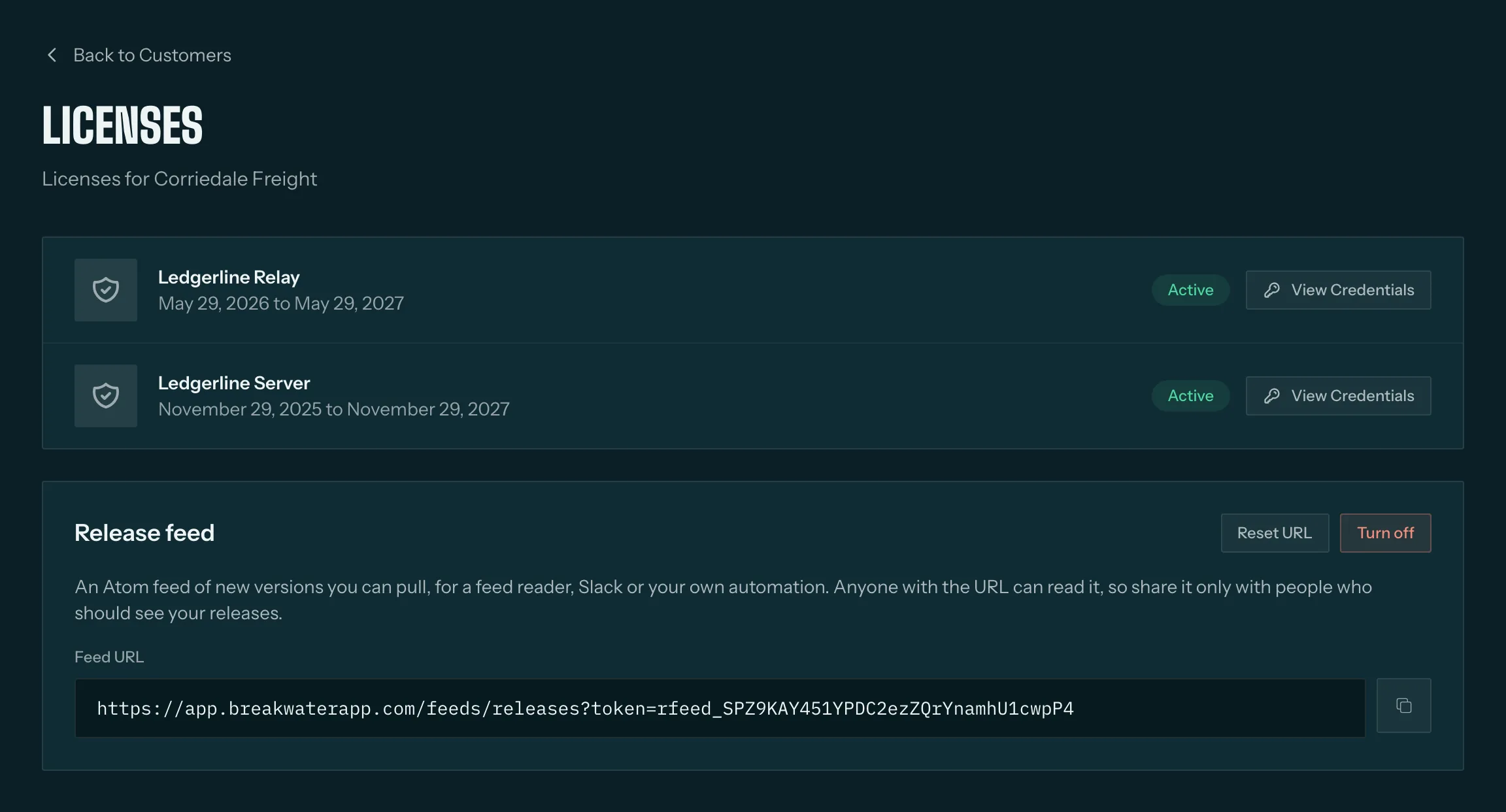
Now the customer's side. Corriedale's team signs in to their own portal and sees their licenses, nothing else. A release feed tells them when a version they can pull comes out.
04
Credentials of their own
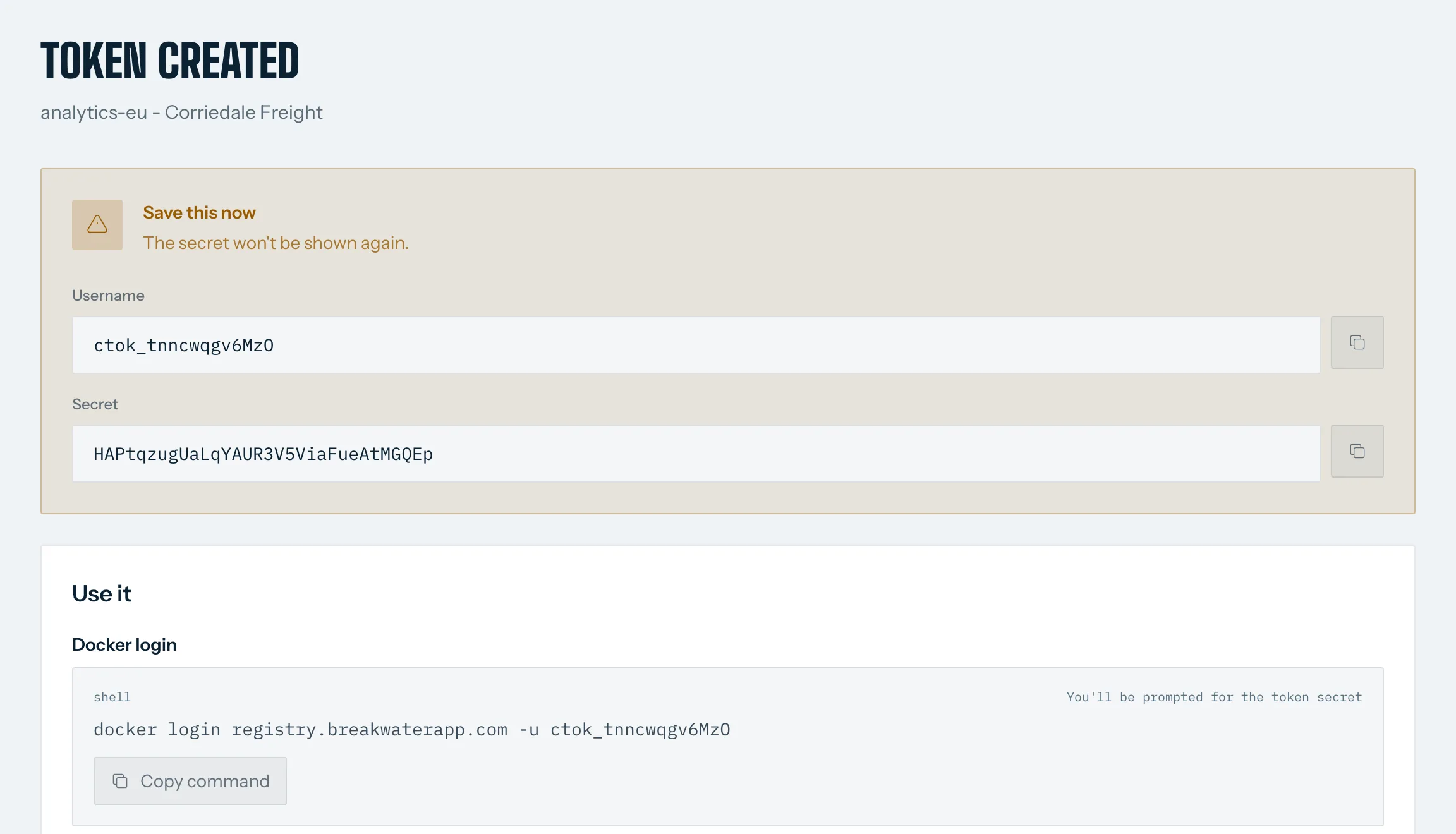
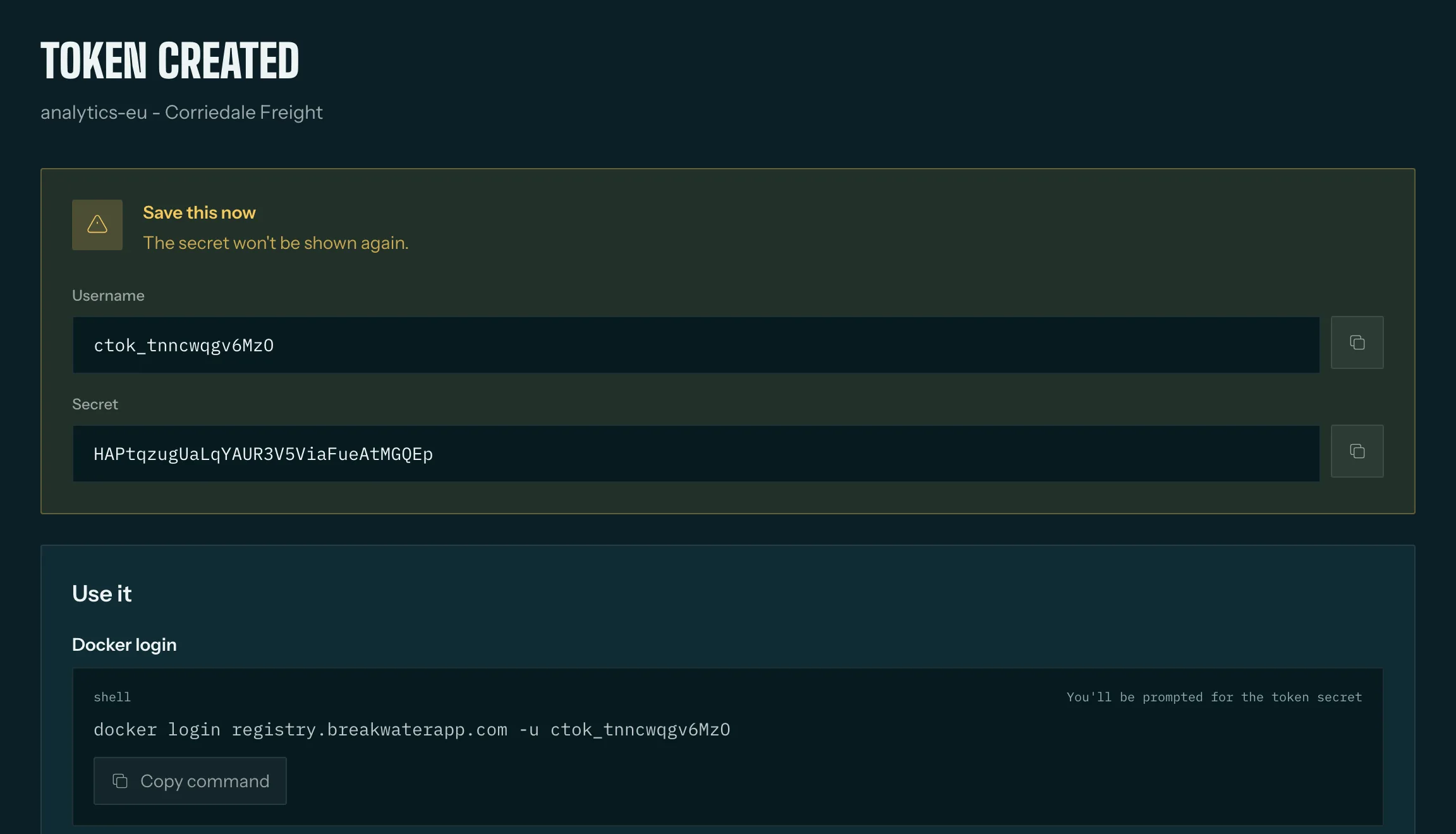
Customers make their own pull tokens, one for each cluster or pipeline, and copy the docker login. The secret is shown once. There's no shared password to hand out, and nobody emails you asking for one.
05
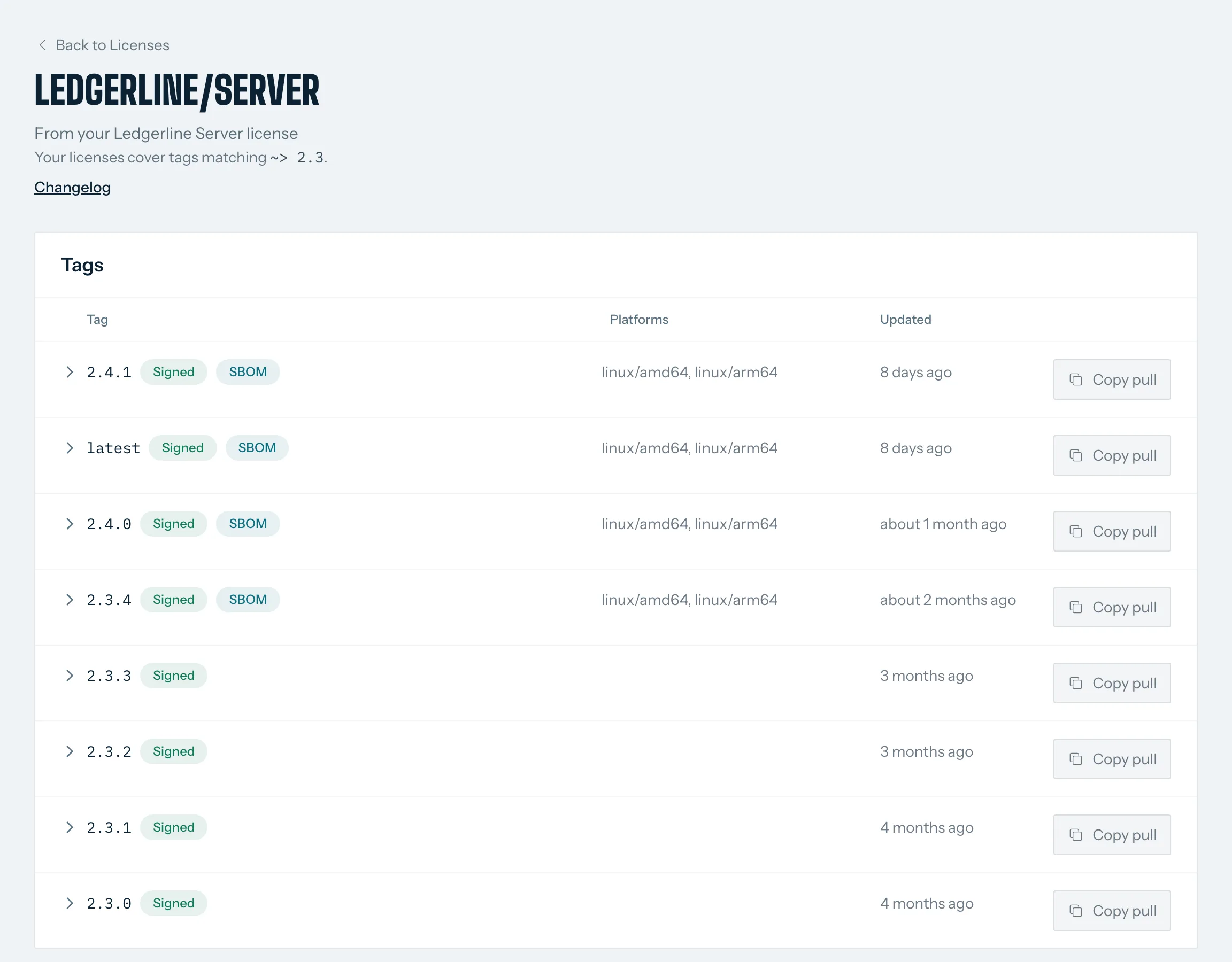
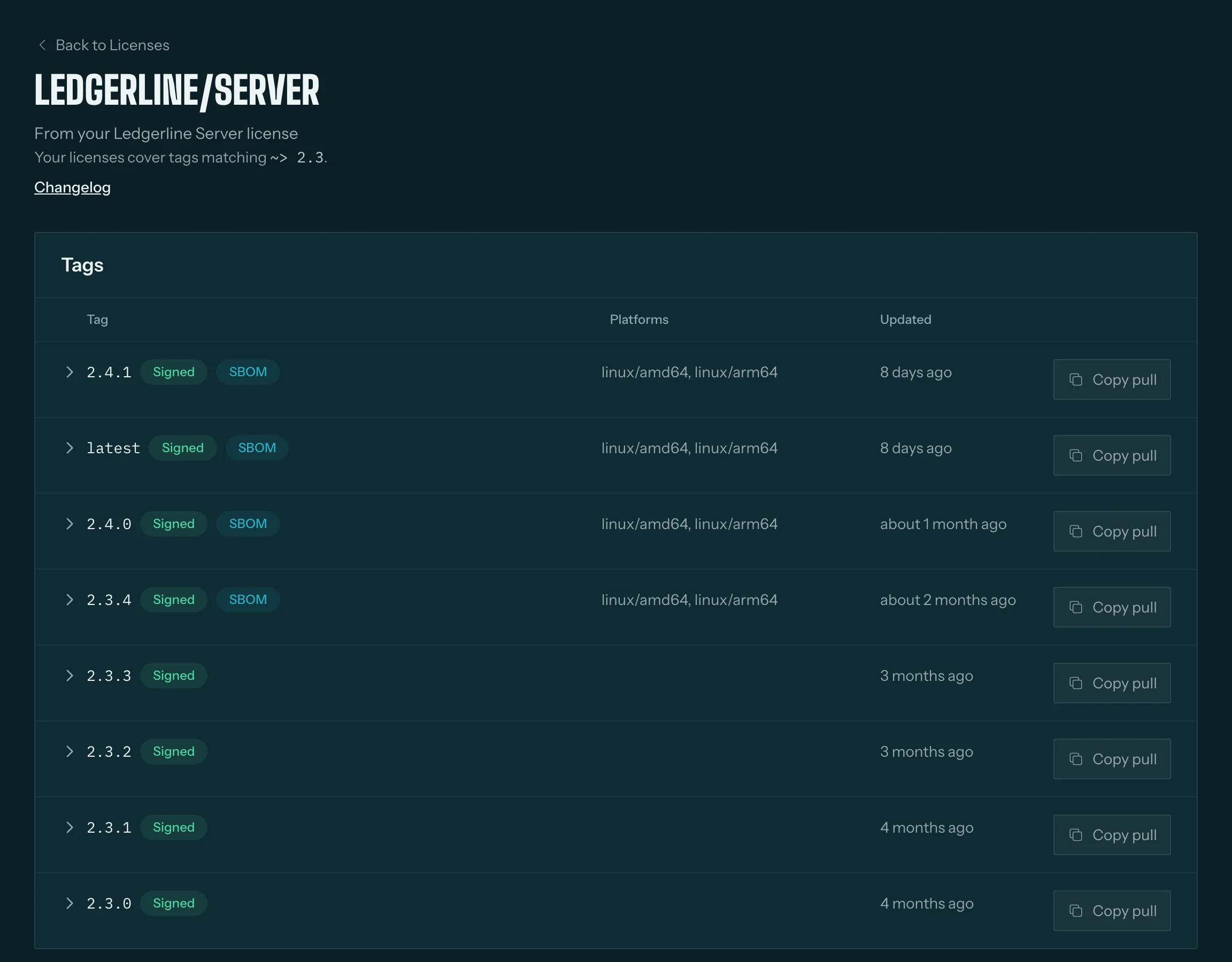
The versions they can pull
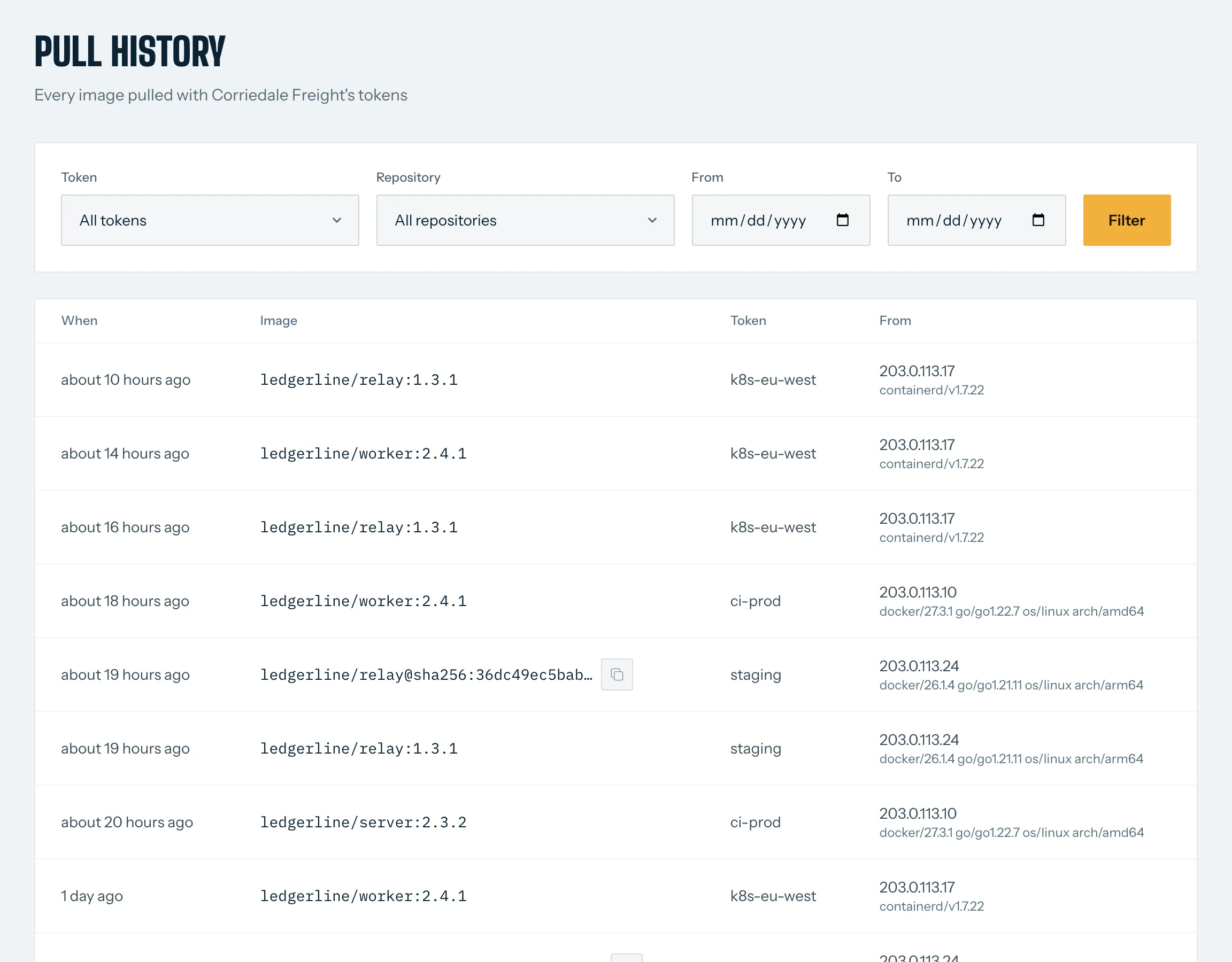
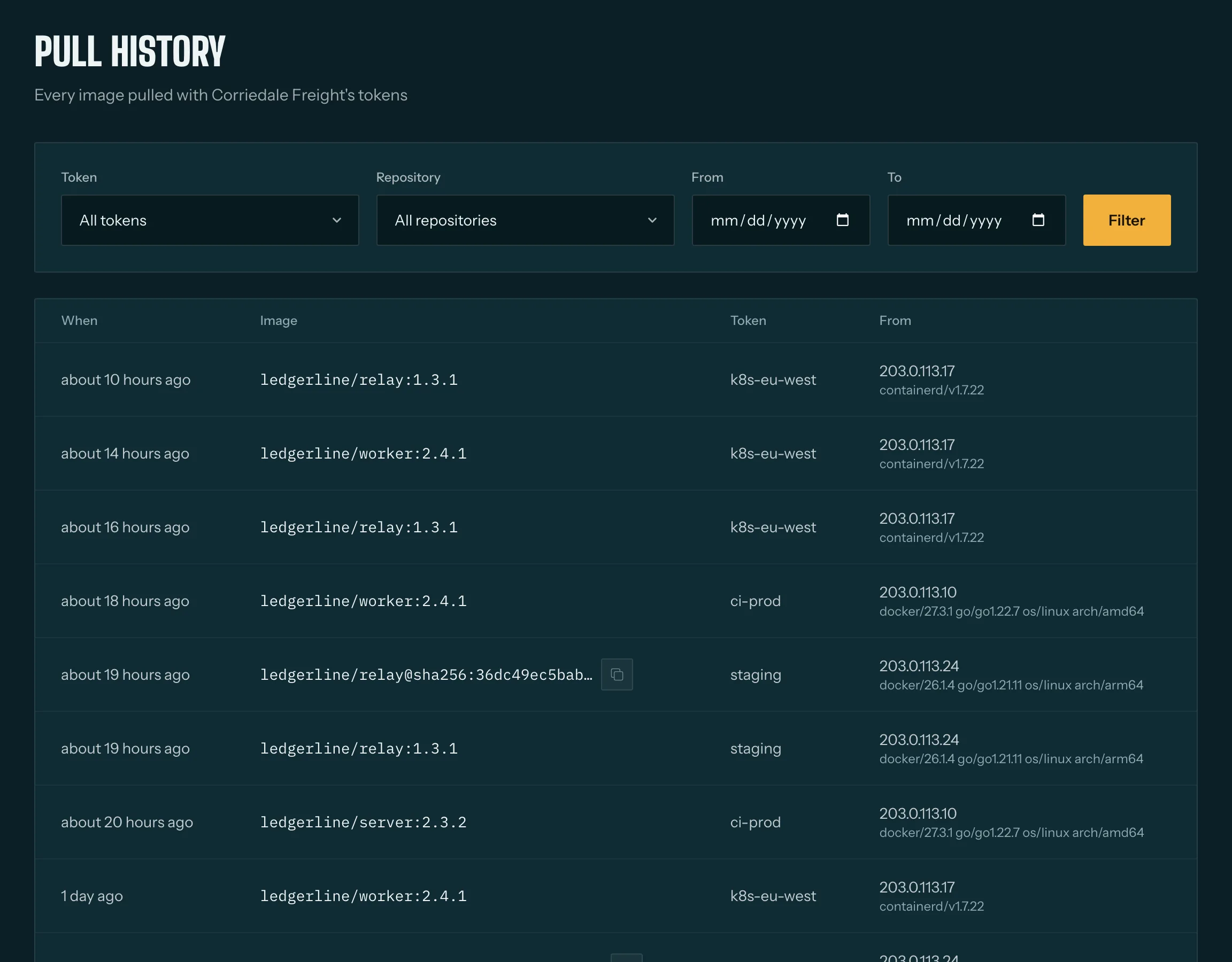
They browse only the tags their license covers, with platforms, signatures and SBOMs, and they can see every pull made with their tokens.
06
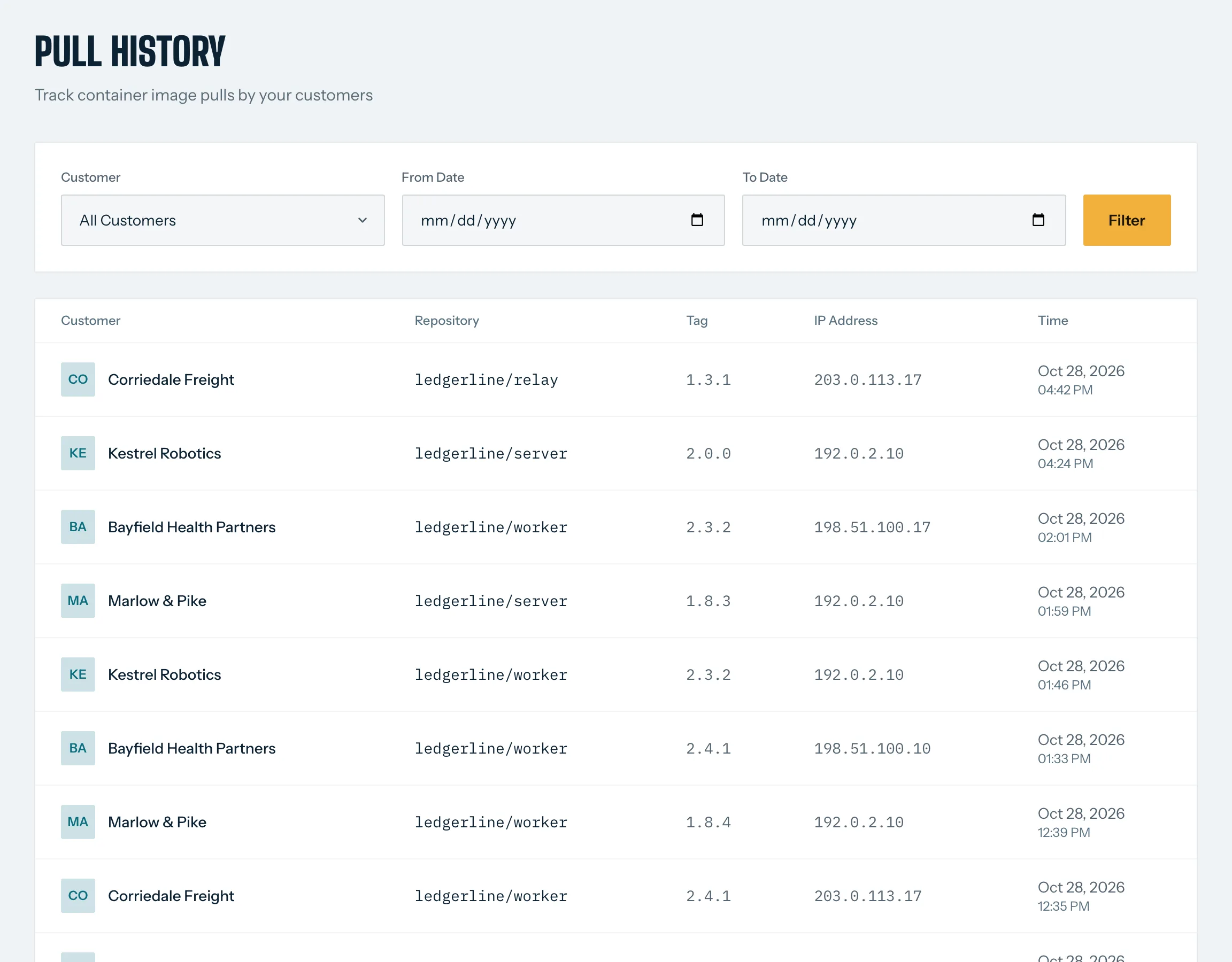
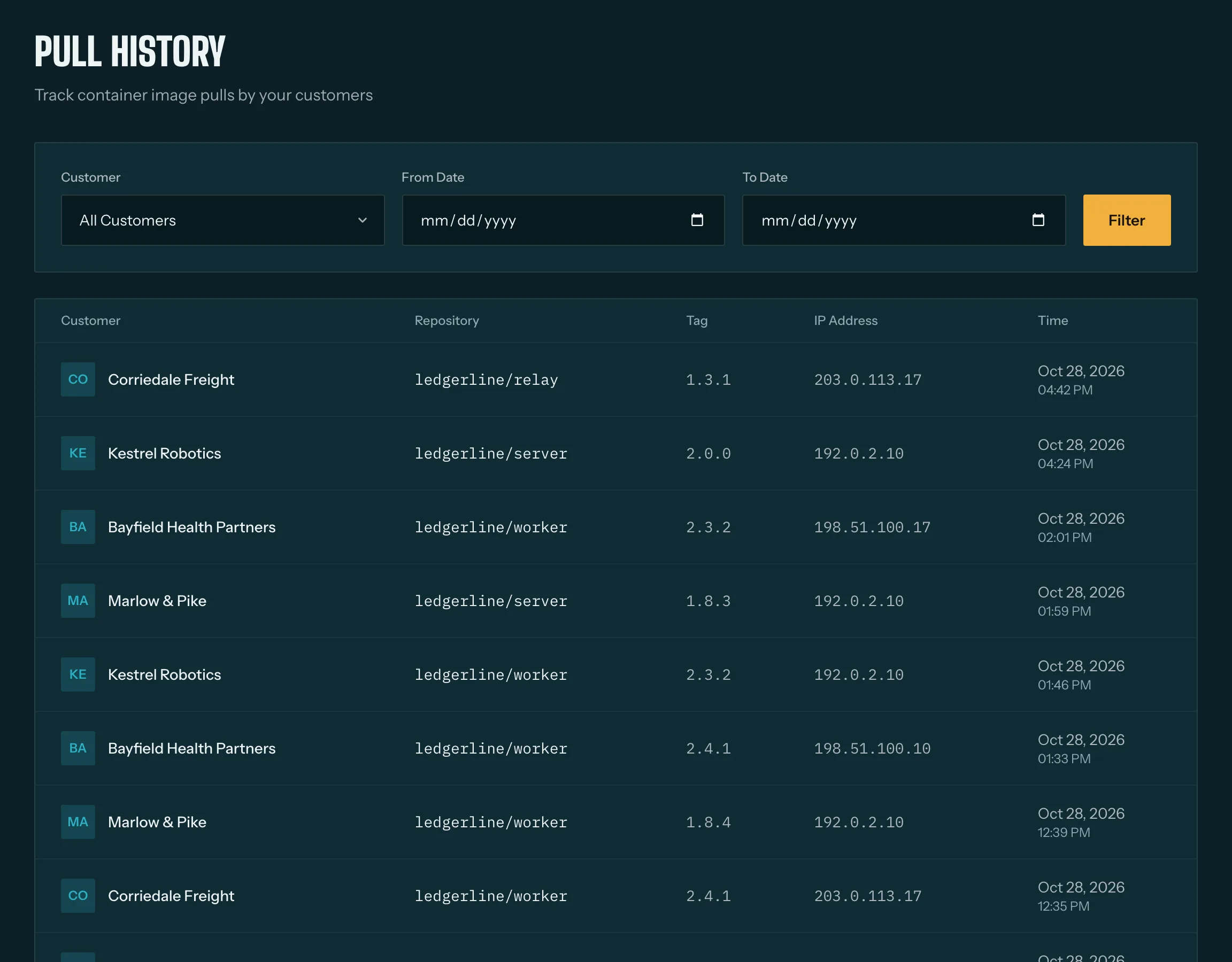
Who's pulling what
Back on your side, every pull is on record: which customer, which image and tag, from where and when.
07
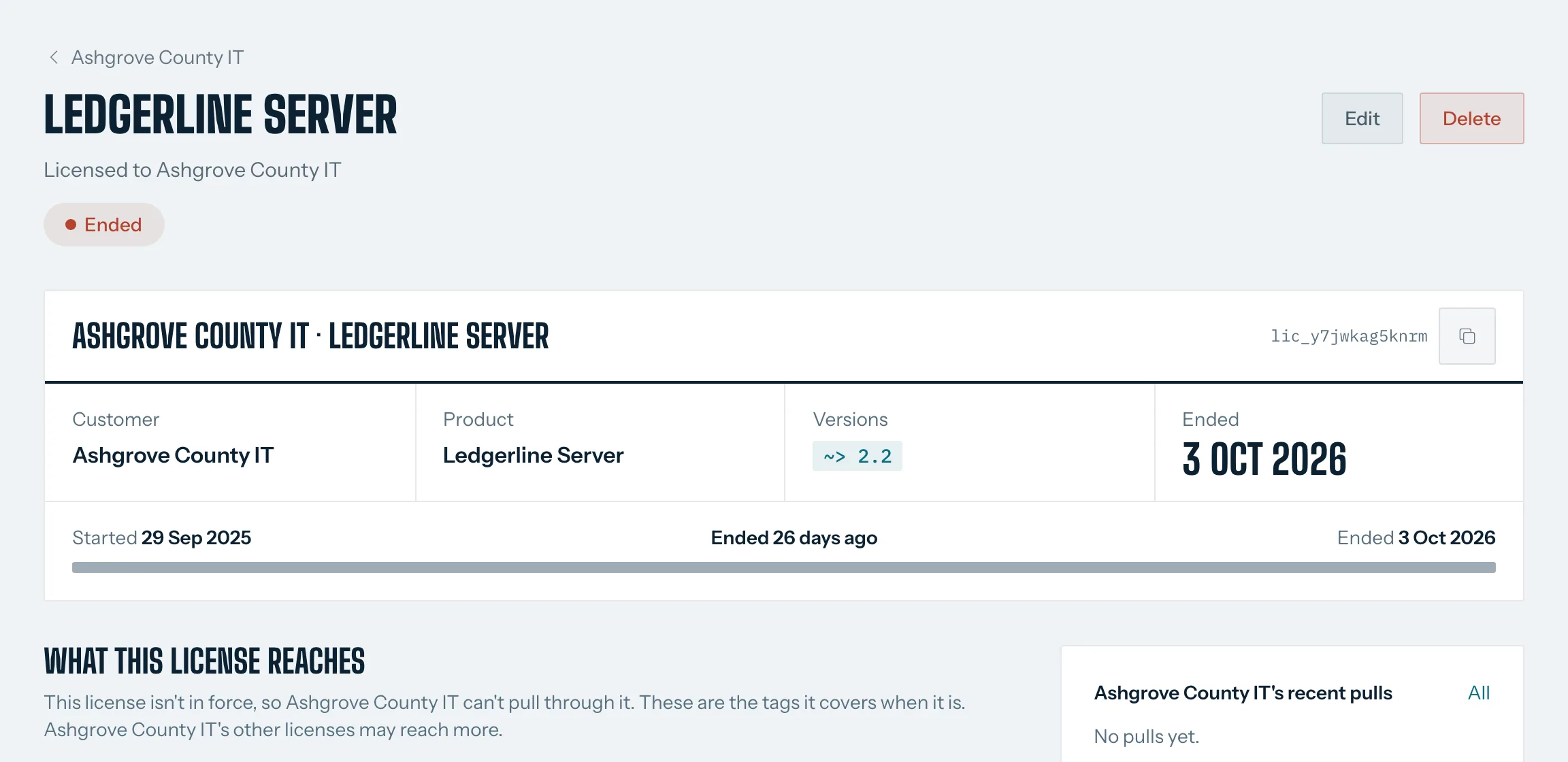
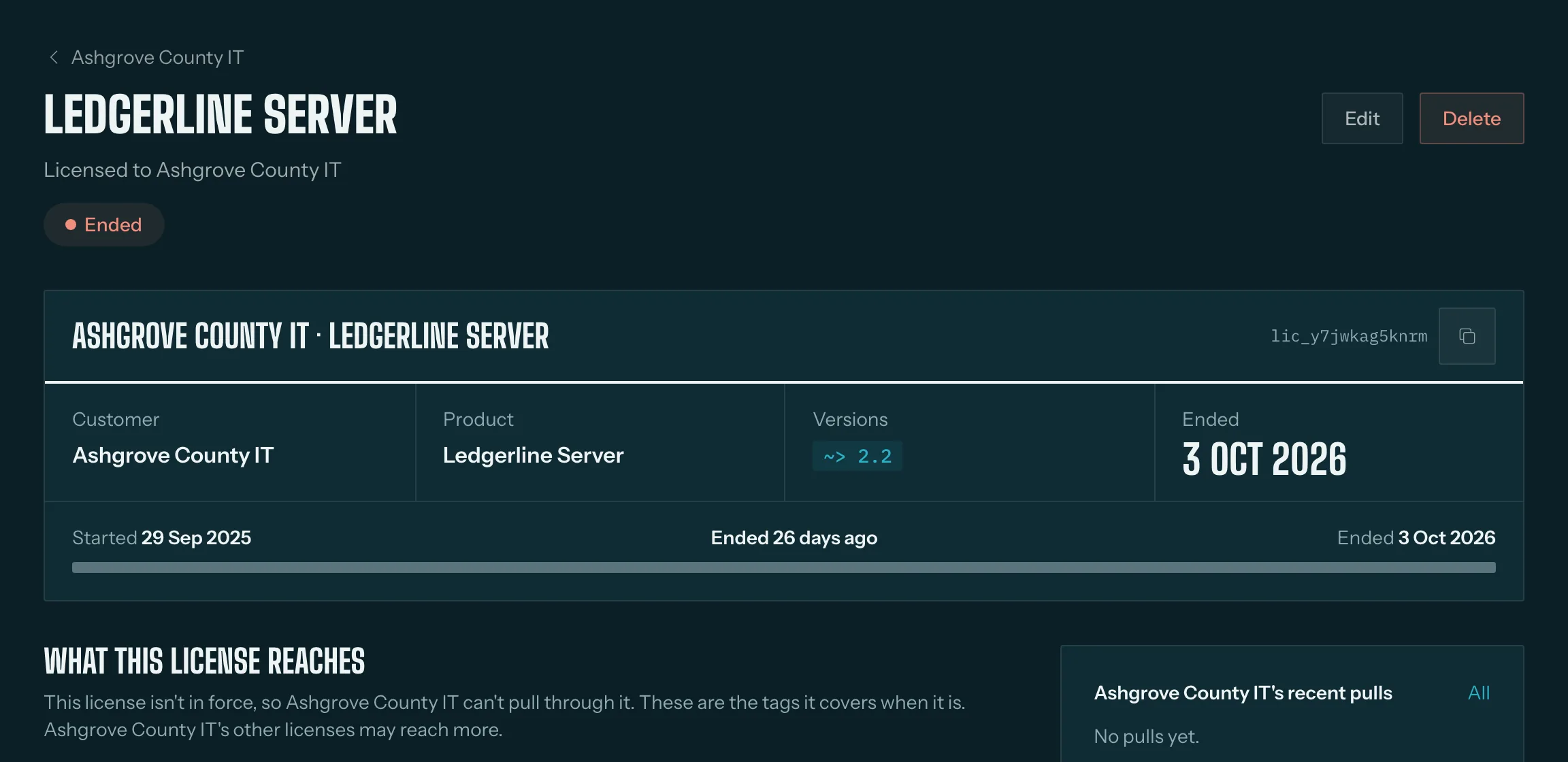
When a license ends
When a license reaches its end date or you cancel it, the registry stops letting the customer pull through it. There's no credential to rotate and nobody else is affected.
08
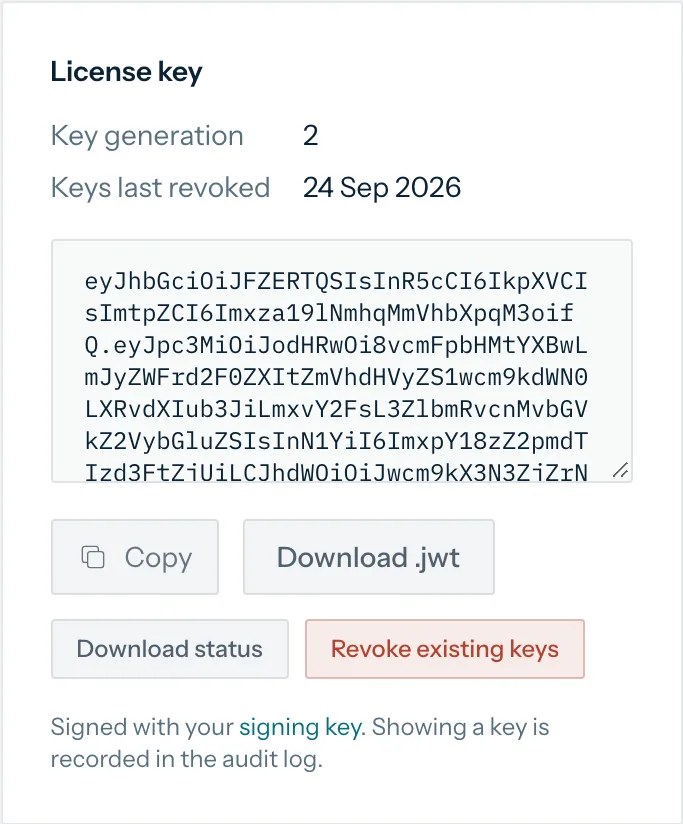
License keys for your app
A license can also issue a signed key that your own software checks, offline if it has to. Revoke the keys issued so far and they stop passing status checks; an app that doesn't check keeps working until its key expires.
Built for your team
Sign-in, integrations and a record of every change, for the people who run it on your side.
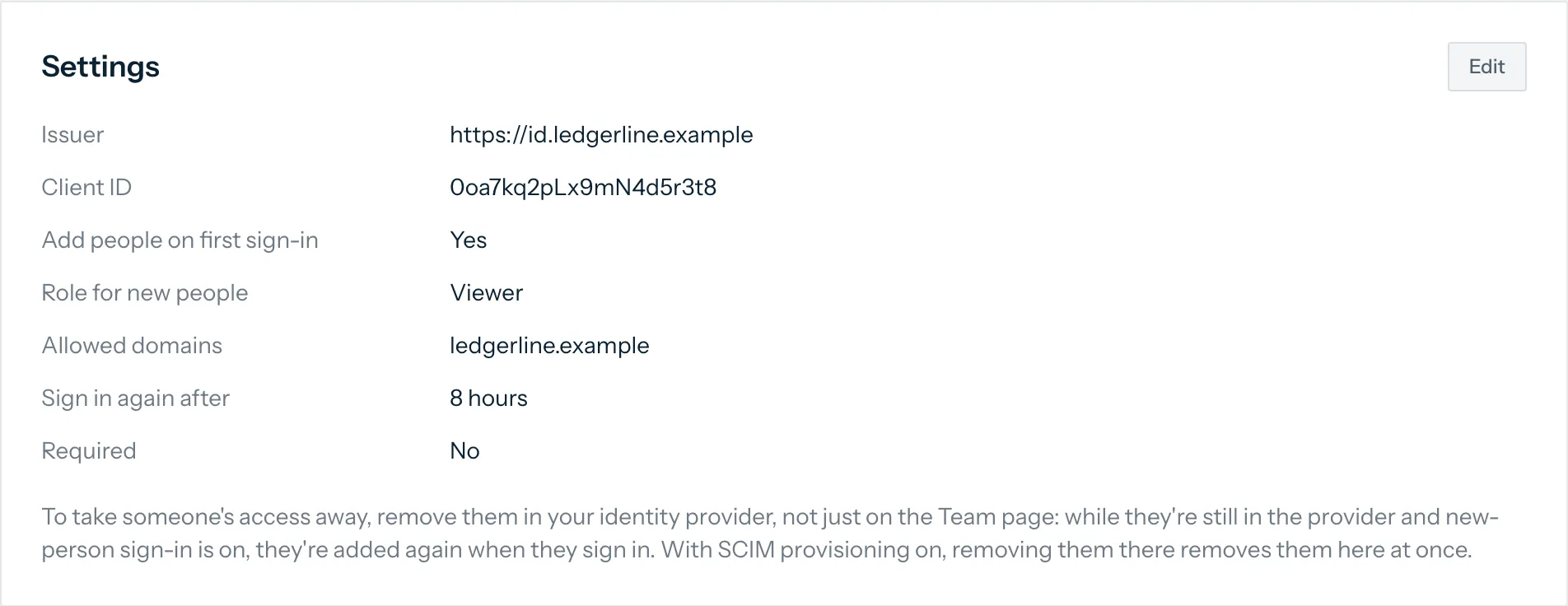
Single sign-on and SCIM
Your team signs in through your identity provider with OIDC or SAML, and SCIM removes people the day they leave.
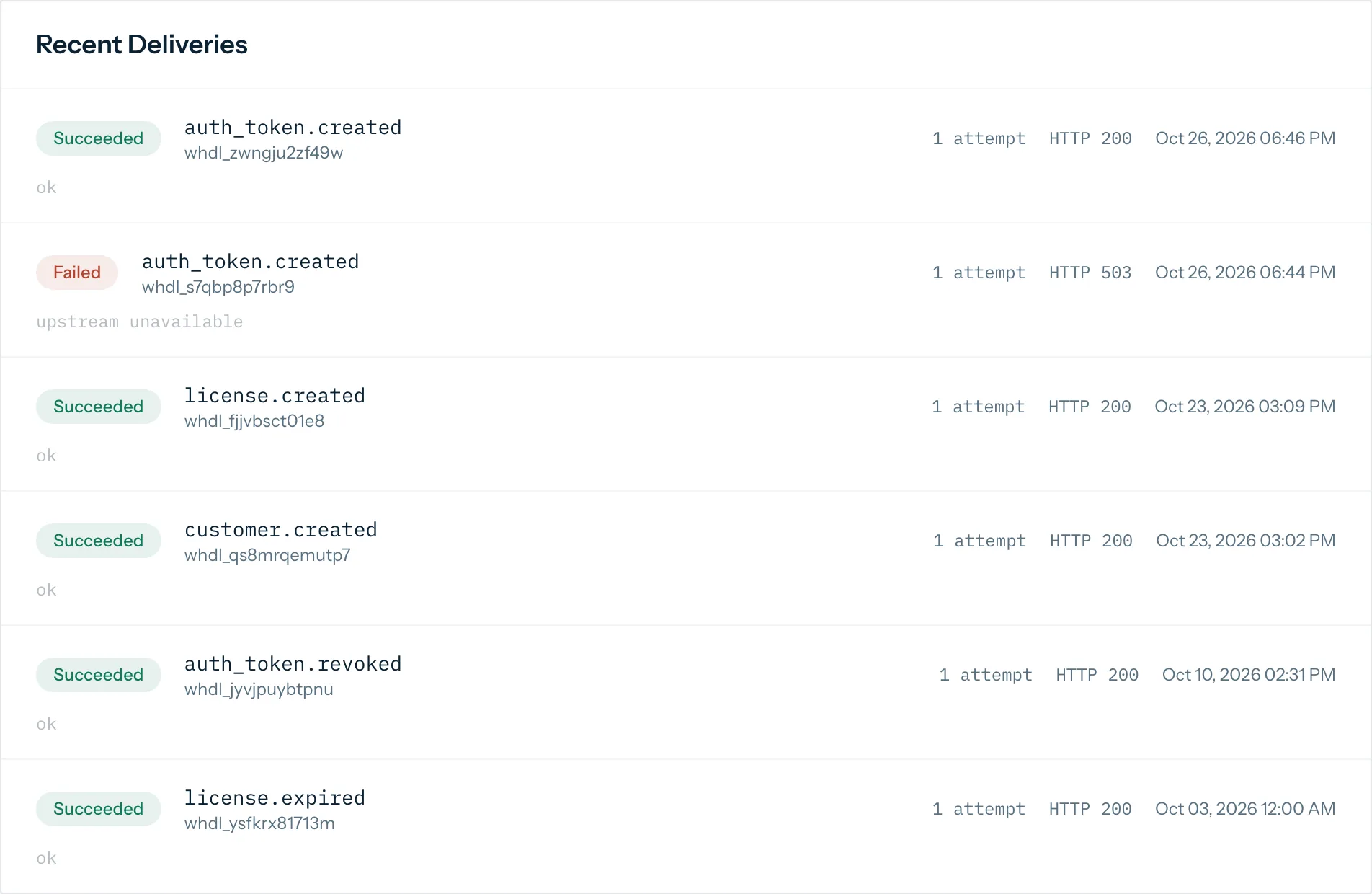
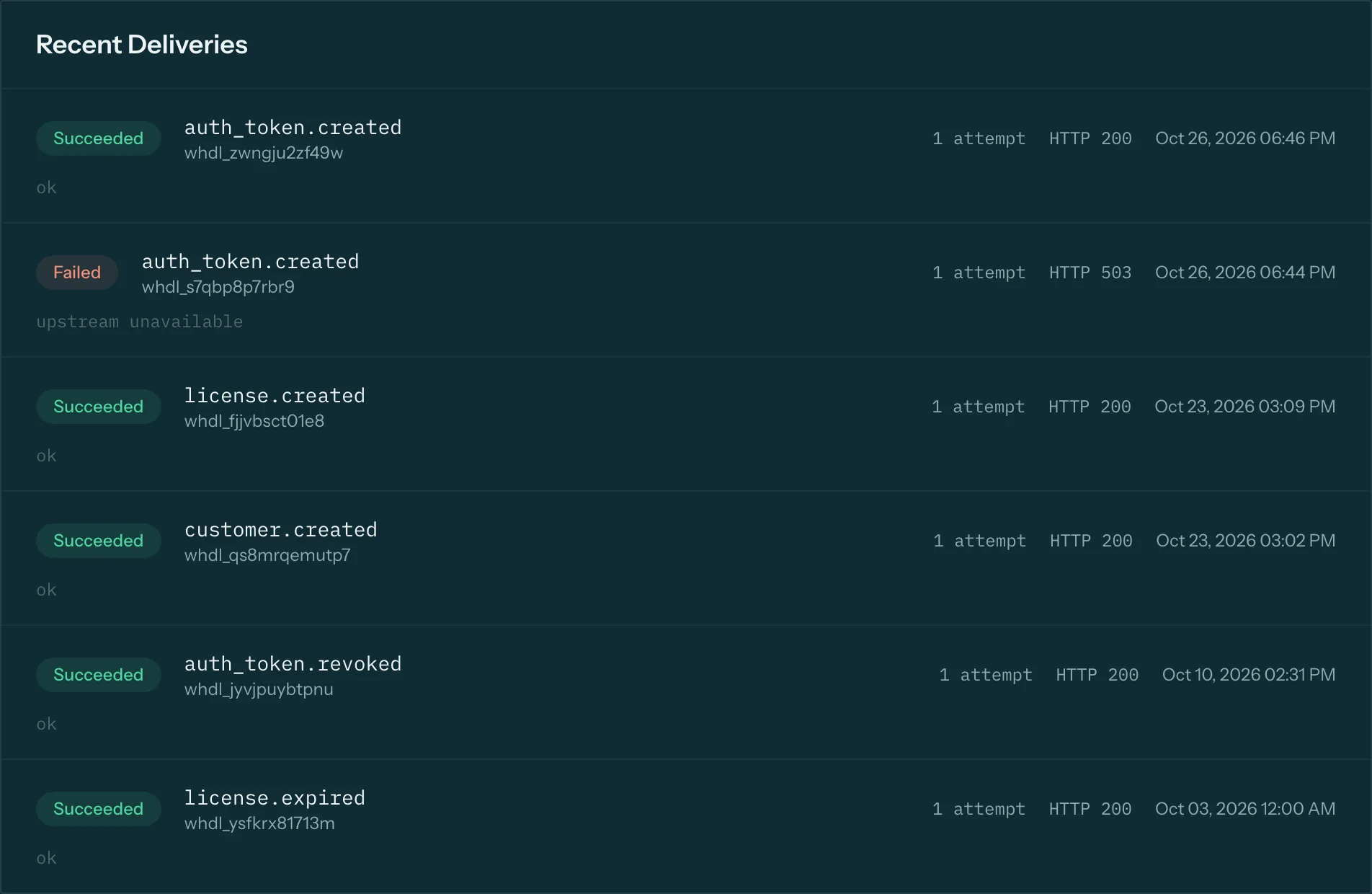
Webhooks
Tell your billing system or CRM when licenses, customers and tokens change. Every delivery is logged.
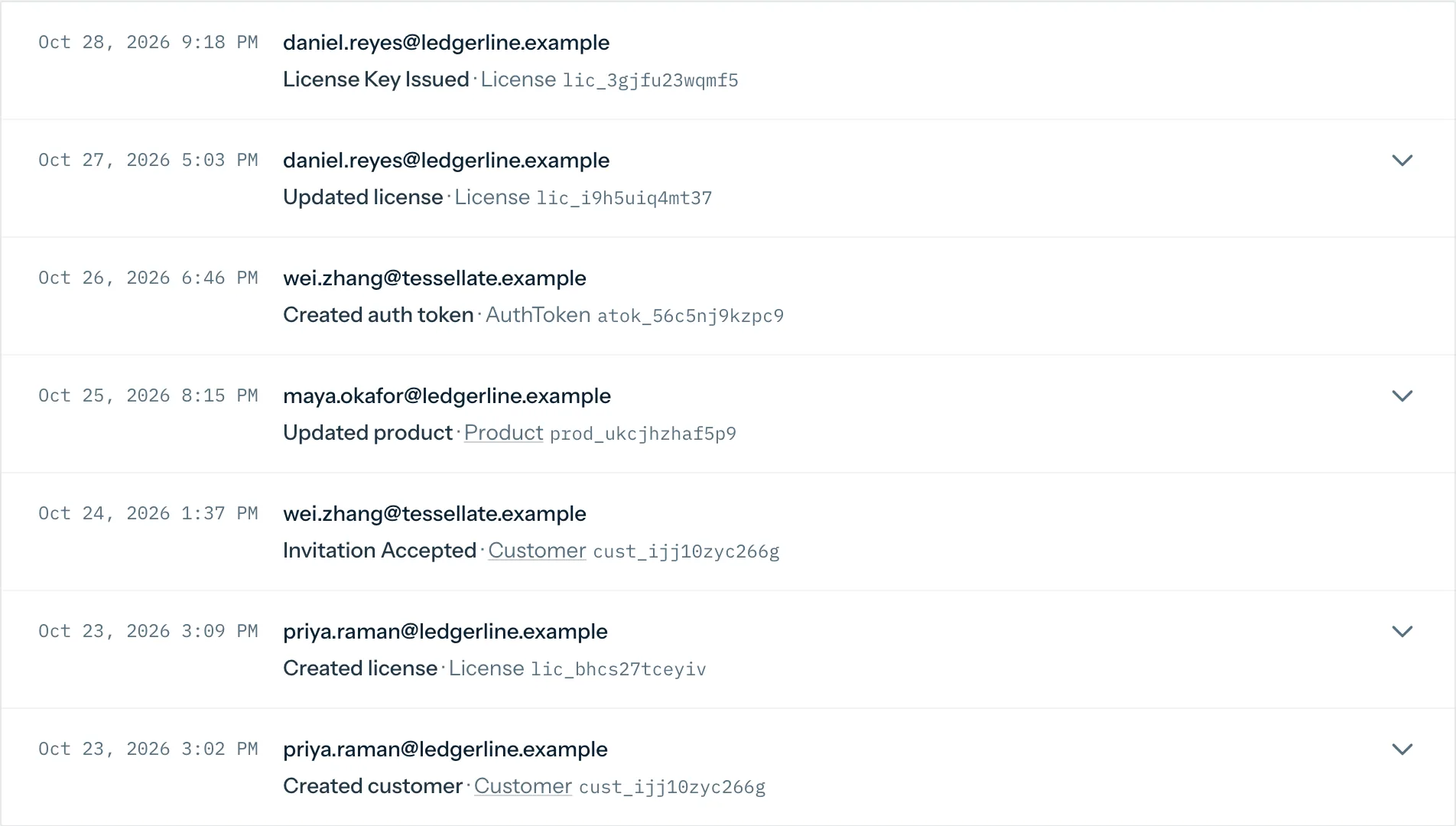
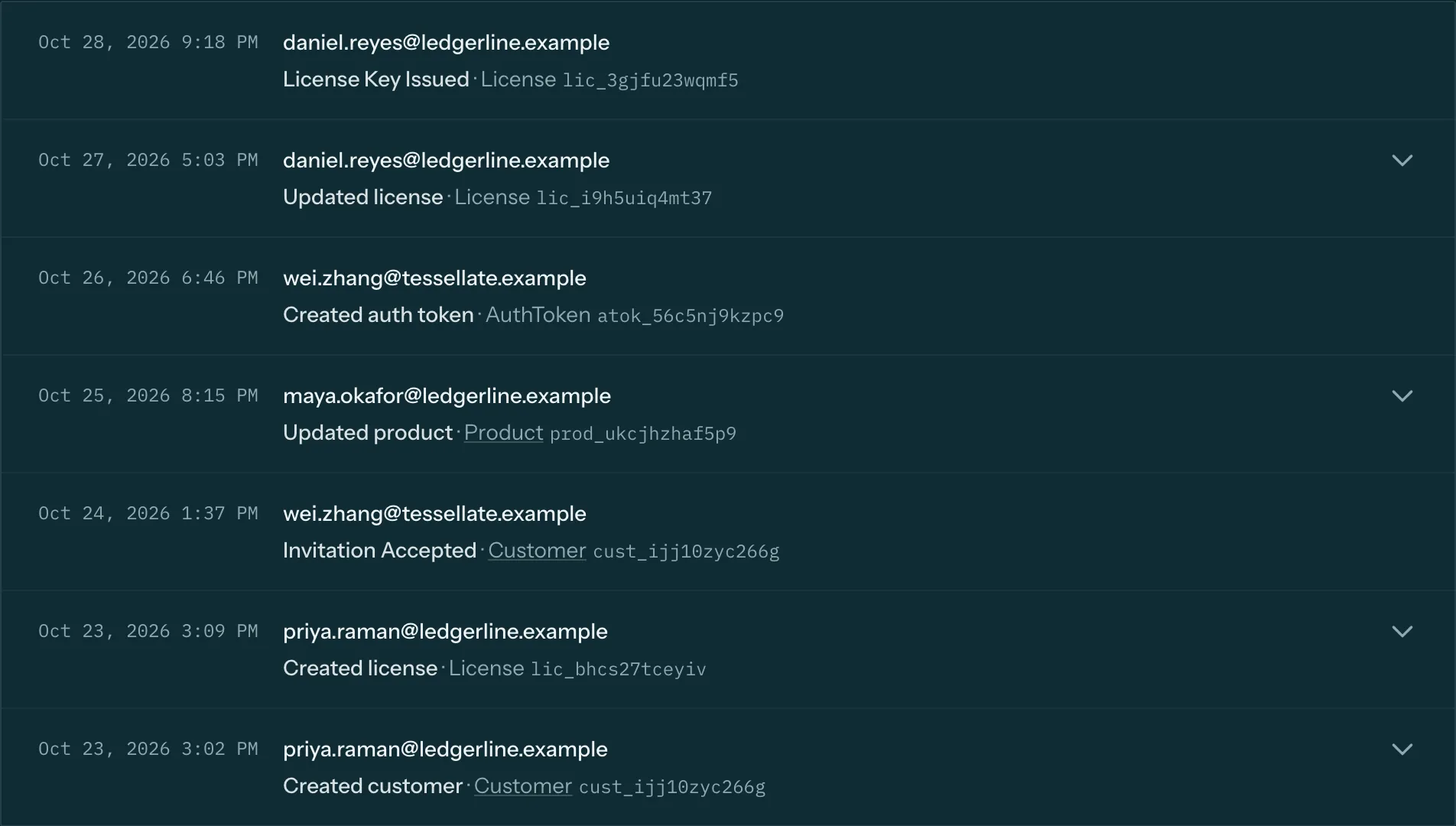
Audit log
Every change your team and your customers make, with who made it and when.
Start with your first customer
You don't need a platform team to sell containerized software. The Starter plan covers your first customers, with no registry to set up.